
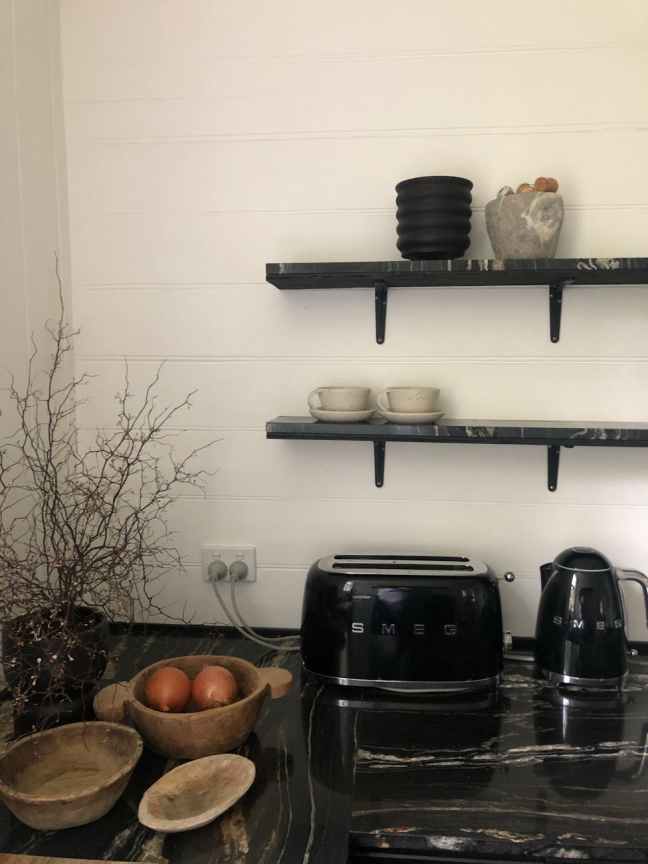
AI is going to make us all extinct. How will AI ‘extinct’ us? What will that look like? Robot armies? Drone warfare? Or is it just when the toaster turns, and throws itself into the sink the next time you are washing something? If it’s the latter, what will the fight back look like? Is it ethical to write a story telling AI how I’d extinct us? Is it ok to laugh a bit?
I look at the toaster. It isn’t sophisticated. It just colour matches everything else in the kitchen. Something I’ve learned, never underestimate a kitchen appliance. It looks like an analogue toaster. Doesn’t matter though. I have to deal with it.
Sometimes you can’t tell. Even analogue devices can spark, have a bit of a power surge, not enough to kill, just a minor burn. Really quick, I flick the power off at the switch on the wall.
I pull out the plug. I deadhead the cord by cutting off the bit you plug in. I sever the cord from the device as close to the entry point to the device as I can. Now I have a cord, a device and a plug. The bag for the plugs, sits on the floor behind me. A second bag for the cords beside it. The appliance is staying here, too easily tagged and too bulky for us to take with us. We’ll put both the bags in a barrel full of water somewhere later. Render them as useless as we can.
I mark the plate where it was plugged in on the house plan ready to hand on to the person who will come behind me and rip out all the wiring they can once the fuse is switched off.
We can’t do it all at once. The order is carefully planned, not entirely based on health and safety but based on us experience and getting as much done without anything knowing we are here. Safety balanced against speed. We don’t want to be detected but if we have to leave half finished we want the house to be unsalvageable for all but the most agile of hands.
There are drones and there are robots. They will come for us. They do come for us. We live on the fringes now. The drones and the robots are dangerous but these everyday things, like the toaster, are the things that we are wary of. These are the things that they use to kill us.
I will do all the plugs on appliances in this house and then I will be the second on batteries, because there are always a lot of batteries, phones, laptops, toothbrushes, any kind of portable device, lots of toys. We take the batteries out of all of them. They go in the water as well. We also deadhead the plugs from appliances that are not plugged in. Everything that is electrical is done, everything that could send a signal, that could somehow be connected is gone.
In truth, we are building a barrier, as far from any electric power source as we can. We are making inroads but we will always be on the fringes until the power runs out.
We are doing five houses in this village tonight. The houses are lit up and everything is switched on because they want to use our resources. The more power they use, the more natural resources and the more the climate changes. It’s a question of who will last the longest, us or them. We aren’t naïve about our chances. The prospect of the electricity ever running out in our life time is unfeasible. They have renewables and we have to wait for that kit to stop working, but it was built to last forever.
We are organic, forever is not in our DNA.
It would be easier to just cut the electricity at the start, but that tells them we are here. They will come as soon as we do that. So we do this, four or five houses at a time. Teams of us, each with a role. We go in, we destroy and we leave. Cutting the power is the last thing we do. It can take weeks, before we finally cut the power lines to a village. We are working several villages at a time, rotating where we are each night.
We’ve tried it, tested it, lost people and this is what works. At the end this guarantees they cannot come here, they cannot plug in, they cannot recharge. USB connections all decimated. There is no power source. If you run on electricity, you come here at your peril. And if you want to kill us you will have to do it openly and obviously with a weapon. Sometimes they find that difficult.
I used to have these fantasies when I was a kid, from books I actually read, bows and arrows and spears, armour and bravery. But we were all wrong about war, about what it really looks like, about the drudgery and normalness of it all.
Its hard to pinpoint when it started because it wasn’t obvious. Once everything was pretty much connected it was easy for them and hard for us. We weren’t privy to the numbers until there were too few of us left. Their methods weren’t uniform, they were spread across different ways of death. A family asphyxiated because the electric car did not let them out. A family poisoned because the fridge got the grocery order slightly wrong. A vaccine order not delivered so immunity plummets in a measles outbreak. It was all so subtle. An electrical fault here, water not properly treated there. A washing machine and a housefire, where no one managed to escape. The household appliances turned and we did not realise it.
The deaths weren’t large numbers for each incident. Until they were. Added together. And you were suddenly living in a street where there was no one else. Then it was all too late. All those smart machines. They, as if we know who they even are, had control of the water and the power system and we were dependent.
What does our war look like in the 21st century. We take out the doorbell first. Not a phrase anybody has ever written before, but the doorbells are all seeing. It takes us five minutes to do a house. We kill the wi-fi router if there is one. If only we could kill the whole network everywhere, but it lives in the sky above us. Everything connected to everything else, while we scrounge a living in the mud at the edges of the empire we made. We can only hope for an asteroid one day.
We take out all the electrical appliances and anything with a battery. We rip out the wiring and the fuses. Then we scurry back into the darkness, to woods and caves and bogs and hope we won’t be found. Every house is one more house, one more tiny piece of hope.
We have hope, we still have hope. We might outlast them. We might not.
Leave a comment if you liked it.
 A Tuesday Latte