If you write a book and no one reads it, did you ever really write it?

If you write a book and no one reads it, did you ever really write it?

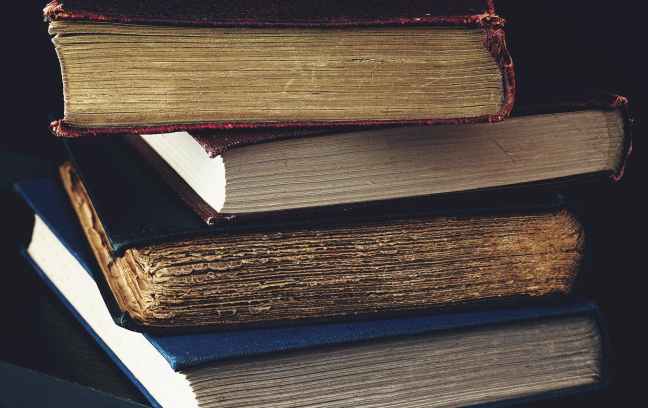
The book sat on the library shelf for a good few months after she died. I wasn’t here when the original events happened, only when the end came. I had thought to put the book in the coffin but then events intervened.

Lynette was always a little odd, but only a little, not so wildly odd that you needed to worry. I managed her in the last few years she worked here at the library. Lynette wore the same plaid skirt, same olive cardigan and green shirt almost everyday. She had the same box haircut all the time I knew her. All that ever changed was the little pin she used to keep her hair off her face. Sometimes it had a tiny enamel flower on it, sometimes a little cat, sometimes a strawberry or a heart.

Truthfully I should have made her redundant when we got computers but she was compliant, easy to manage. She had the neatest handwriting and she seemed to just be part of the library. Even if I’d have made her redundant she’d still have been here every day.

The story goes that there had been an academic here, a man. Married apparently. He used to come into the library. He was always friendly to Lynette. It was no secret she was infatuated. It wasn’t returned.

There were, apparently, a lot of girls. He had his favourites, one of whom was Jeanette. They flirted a lot, in the library. He would lean in close and she would smile up at him. There were rumours. His wife was a harridan-aren’t they always though? Jeanette was by all accounts young and attractive and now I have seen a photo of her I can see that they looked good together. Too bad for the wife.

Lynette and Jeanette were friends despite Lynette’s feelings for the man. We’ll never know what really happened. They simply disappeared one day-Jeanette and this man. Just sort of ran away together. No one was surprised. Jeanette had a cousin who thought it was out of character but no one bothered with it much. The wife pressed the police but who believes a scorned wife.

There was a lot of gossip but not much else. Lynette never mentioned it.

In any event a few months afterwards, the book turned up. In the library. On the shelf. Catalogued and all. No one thought anything of it. It was his last work before he left and ran away, a hardback version, properly bound. It was the only copy we had but we assumed somehow that there were other copies out there.

We should have offered it to his wife, but I wasn’t here then and that didn’t happen. So it sat there and the only person who ever took any notice of it was Lynette. She would take it off the shelf occasionally and look at. Just look at the cover. I once told her she should read it and that’s when it became a kind of joke-if no one reads it has it ever been written. We didn’t do it intentionally but we just kind of made sure that we didn’t ever direct anybody to the book and it just sat there. There was no title printed on the spine and everyone overlooked it.

Then Lynette died. Quite suddenly. And I thought of the book and how it had made us laugh. I thought it would be a nice gesture to place it in her coffin. She had seemed attached to it, a memory of an unrequited love. She had few friends and no family. So I took the book off the shelf.

I sat down to thumb through the pages. It occurred to me after all this time I had no idea what it was even about.

I opened it. And there, where the pages had been cut out neatly to shape a space was a pair of hands bound together, severed off at the wrists and perfectly preserved and a note, in the neatest handwriting.

‘Romance is dead.’

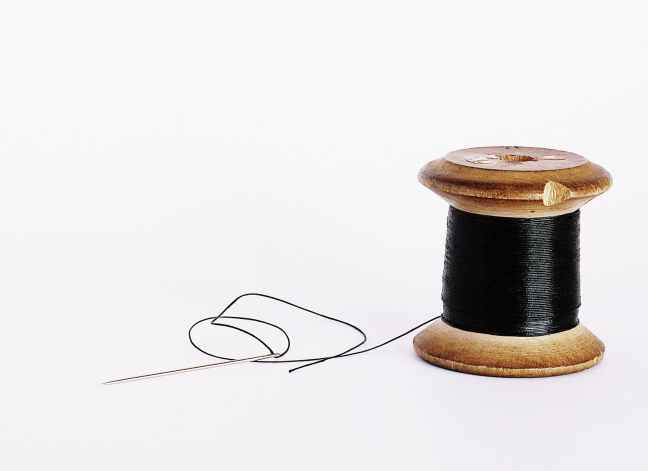
Needle in, needle out

They are watching, always watching.
Needle in, needle out. Needle in, needle out.

I live inside my head. I remember. Sitting by the fire with my mother. Learning to sew. The warmth, the comfort. All of that. And now this.

Needle in, needle out. Needle in, needle out.

The ability of clothes to transform. I have learned to block out all the noise, the pain. To pretend it’s a movie going on around me.

They are watching, always watching.
Needle in, needle out. Needle in, needle out.

Focus on the seam, on getting the two sides together. On getting it straight. Neat tidy stitches. One row after another. A new needle. More cotton. Strong powerful thread.

Needle in, needle out. Needle in, needle out.

The act of creation. Of making something wearable from a long length of fabric, of putting two things together to make it something new. That is not what is happening here.

They are watching, always watching.
Needle in, needle out. Needle in, needle out.

One stitch after another. My hands worn. Reddened. Fingertips smooth. Wrists, swollen, sore. This material is difficult. It doesn’t want to come together. It pulls apart. Flakes away.

Needle in, needle out. Needle in, needle out.

Clothes can transform, they can take you somewhere else. One stitch after another to make something new. This material can’t be pinned.

And still they are watching me, always watching.
Needle in, needle out. Needle in, needle out.

Their desperate eyes watch my hands fly. I am so fast, so very good at this. At holding their wound together as I flay my needle across and through their wretched skin. My hands. Soaked in blood.

Needle in, needle out. Needle in, needle out.

As if the power of sewing could heal them all and stop this bloody war.

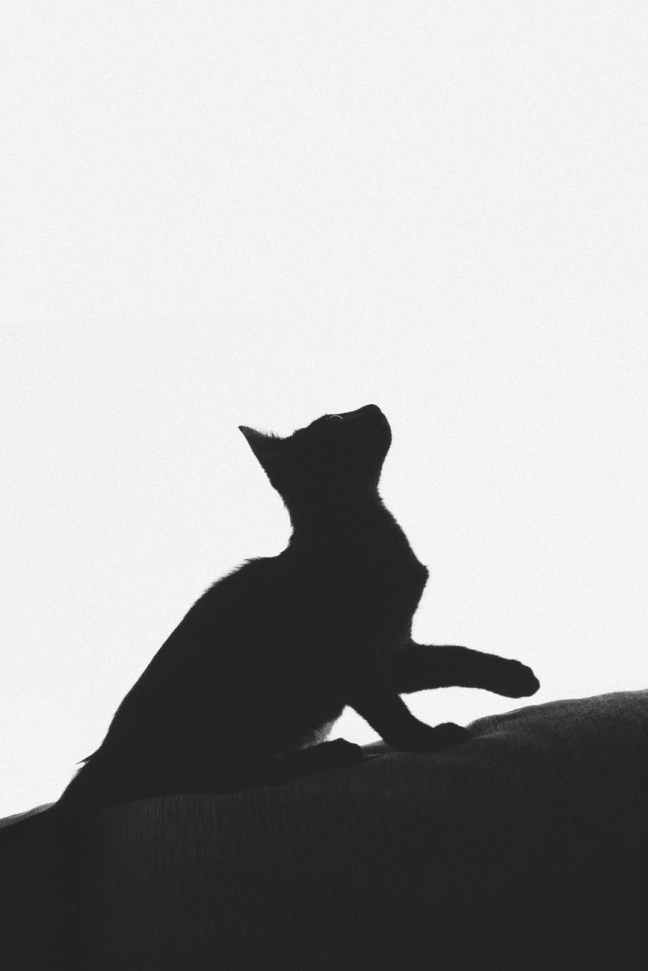
Come the apocalypse, we’ll eat the cat

My mother always said ‘Come the apocalypse, we’ll eat the cat.’

None of us took it too seriously. And then the apocalypse came.

It was more civilised than you think. It was announced on the BBC. The second the announcement was finished, she went looking for the cat. I think we all felt it was a bit too soon. I remember my Dad sitting at the dining table, pushing the meat around his plate with a fork. It felt a bit unseemly, as if there should have been a bit of a notice period. Time to say goodbye.

There wasn’t.

It was in the pot and on our plates before most looters even got out of bed. Here’s a tip, early evening apocalypses are best. People don’t believe it, go to bed, don’t wake up. We did wake up, minus the cat.

That first day my Mum visited the neighbours to see if they were ok. They were elderly. She came back laden with cans. We thought that generous at the time. There was meat for dinner again.

‘You know this street is full of elderly neighbours,’ she commented a week later. Followed by ‘enough meat to keep us through the winter.’

I commented that not all old people had cats. She looked at me blankly. I pushed the meat around my plate. I had not seen the neighbours since it happened. I don’t remember our cat being that big.

Since the collapse of civilisation as we know it, there are far fewer people around. We however seemed to have thrived with an inexhaustive supply of fresh meat.

Being honest living through the apocalypse has been lonely. There’s been the kind of atmosphere you’d expect at the apocalypse. A little doom laden, a lot of darkness. Not much water. We’ve coped. Mostly we stayed indoors, with the lights off. We’ve been out raiding other peoples houses, but we rarely see anyone.

We got through the winter with fresh meat. A lot of cats I told myself. We planted vegetables in the autumn. My mother had seeds. She was nothing if not prepared. It’s like she’d been waiting for years.

I can’t remember when Dad disappeared. Now when I look out in the garden though I wonder. There is a particularly fertile patch of soil. I’m sure she didn’t. He just wandered off like she said. Still we had fresh meat.

I think the apocalypse made my Mum happy, proved to her that all that tough parenting she’d put me through was worth it. She was never happier than after it happened. She was hardy and strong my mother. Focussed and determined.

She taught me everything I know.

She cooked well.

She tasted good.